Rebel Goes Dutch

Recently, on the 10 year anniversary of selling my car, I had the honor of being interviewed by Het is Koers on my experience with bike commuting, bike touring, and carfree living in the US. The website doesn’t appear to translate to English in most browsers, so I’ve included the English translation below.
Rebel with a cause
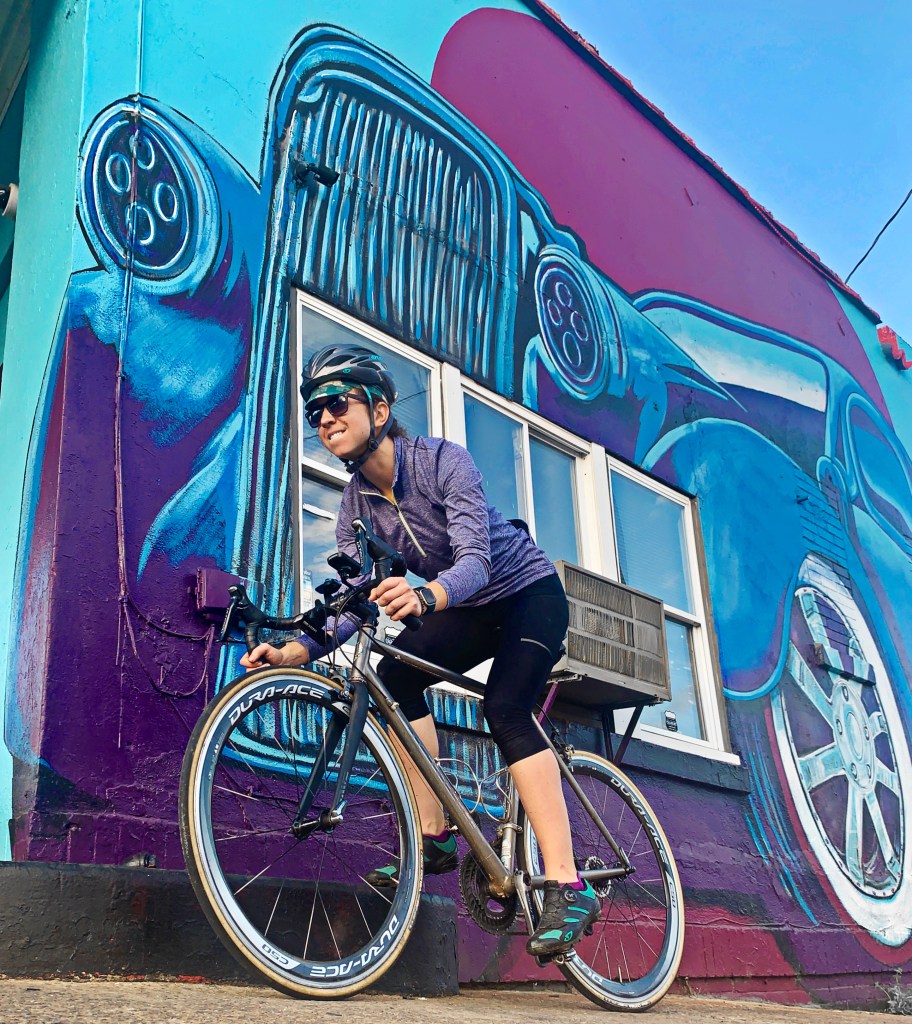
Is it an act of rebellion to live without a car? Perhaps not necessarily in the Low Countries, but certainly in the United States. Where the automobile is still a lot more self-evident than in Europe and where the infrastructure is only limitedly equipped for more active forms of mobility. Mary McGowan denounces this self-evidence. She does this on social media, under the evocative name Rebel Without A Car. Like a modern James Dean – but a rebel with a cause – McGowan questions mobility in her hometown of Greenville, South Carolina and encourages good and safe bicycle routes. A form of healthy rebellion that is needed now more than ever.

By: Niels Steeghs
24 Mar 2025


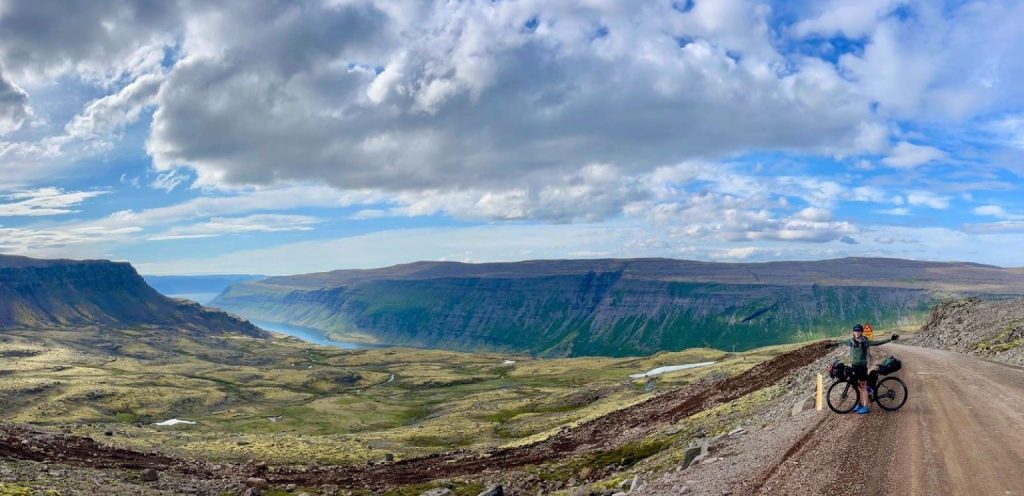
Are there any new things? And a very Dutch-looking Gazelle women’s bike. McGowan works as a speech therapist at a school and has an arsenal of other bikes in addition to the Gazelle. She goes out as often as possible to bikepack, both at home and abroad. She reports on these trips, including the beautiful aspects and the challenges she encounters. Like her recent trip, a series of dysfunctional bridges and challenging roads. But also the encounters with enthusiastic fellow fighters and the beautiful B-routes through the American hinterland. One of her role models is also a good companion on the bike: “A band I like to listen to while cycling is Blind Pilot. They did their first tour on bicycles in California. Just imagine that!”

It has now been ten years since you finally exchanged your car for a bicycle. What has it brought you and what challenges did you encounter? “Honestly, it was both terrifying and liberating. Everyone warned me that I would definitely need a car, because what do you do in an emergency, for example? But the moment I got home from the dealership, without a car, it felt like 1,000 pounds had been lifted off my shoulders. Besides the rent, it was my biggest financial burden and I had already reduced my usage so much that I was driving mainly to keep the engine running. It turns out that the car needs to be driven regularly to keep the battery charged. Of course, I forgot about that and now the car is just sitting dead in my driveway. It’s a funny reminder of how I felt about my last car 10 years ago!” “One of the biggest challenges has been seeing how car ownership is taken for granted. Some of it is funny, like when I cycled to a drive-through testing site during COVID and had to awkwardly explain why I was there on my two-wheeler. Or frustrating, like when I try to get something from a pharmacy or drive-through restaurant and get turned away because I’m not in a car. So much of our infrastructure here was built without people like me in mind. Millions of Americans have no other option, and they are completely left out of decision-making because policymakers—drivers themselves—comfortably assume that everyone has access to a car.”

“I volunteer a lot with Bike Walk Greenville, a local advocacy organization that advocates for safer, more connected cycling and walking infrastructure. What I’ve discovered through this work is that so many people want to drive less but feel like they don’t have a choice. Younger generations in particular are embracing urban ideas, and it’s exciting to see those ideas become more mainstream.”

“Greenville has certainly made some progress, but we have a long way to go. Over the past few years, we brought in volunteer data analysts to map where infrastructure is needed most, especially for those with the least resources. That was a huge step forward in getting the attention of local leaders and securing funding. Right now, our bike infrastructure is pretty limited, and expanding the trail network will take years to realize. That’s why mapping where people are actually walking and biking is so important. Many drivers don’t even realize the alternatives, the biking potential that exists, or that many trips aren’t actually that much longer by bike when you factor in traffic and parking. Older neighborhoods often have better connections, newer neighborhoods are full of dead-end streets that force everyone onto busy roads. “We’re pushing for policy changes so we don’t keep repeating the same mistakes, but car-centric development is often still the default option.”

What’s the story behind your very Dutch-looking Gazelle bike?
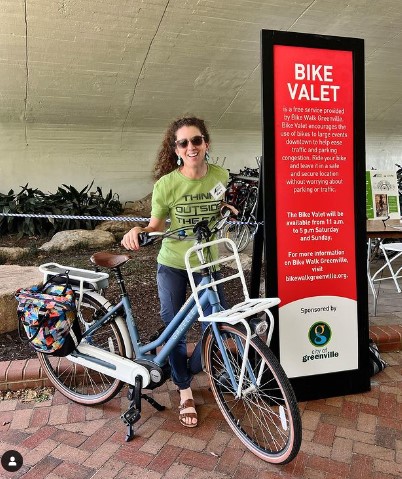
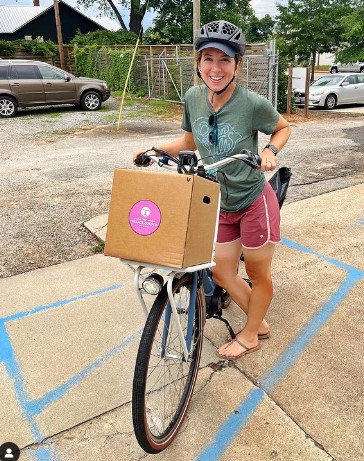
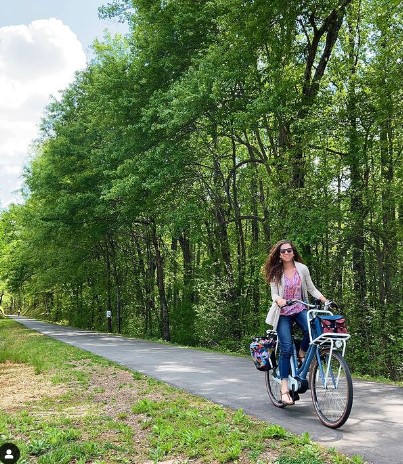
“My Gazelle was given to me by a local entrepreneur who decided to retire and close his e-bike shop a few years ago. After seven years of riding a traditional bike everywhere, switching to an e-bike is a nice upgrade for hauling groceries and commuting. I love the vintage Dutch style, and I wish we saw more bikes like this in the US. Most e-bikes here are designed to look super modern and sporty, but I prefer the classic European bike aesthetic.”

“I fell in love with urban biking when I was studying in Vienna. I bought a used bike in the spring of 2010 and it was truly transformative. I’ve traveled to many places in Europe but haven’t been to the Netherlands yet, partly because I’m afraid I’d never want to leave! I believe in working to make my own community better instead of just moving somewhere that already has great infrastructure. Here I can work to create change so that people who don’t have the privilege of just moving to a better place can benefit too. It’s been encouraging to see that a lot of local conversations have shifted in the 10 years I’ve lived in this city, we’re open to experimenting with new ideas. There are many other people here working to make housing affordable, improve our education system, and reduce pollution – and I feel like access to affordable, healthy transportation is so important to the work others are doing here.”

How do you see the future of active mobility in America, given the current situation? “To be honest, it’s a very dark time for our country. Far too many people still don’t understand the dangerous position we’re in right now. In addition to the usual political stuff being thrown around, safe street projects and policies that we’ve fought for over the last few years are being attacked and politicized like never before. I honestly hope that we can get through the next four years and come out of it with the life, health and well-being of people prioritized, with leadership that really cares about making things better for everyone. I realize that’s a bleak outlook, but I have no problem being honest about where we’re at. I studied political science and history in college, so witnessing current events right now feels really surreal. But I think it’s really important not to normalize what’s happening here, because we’ve apparently learned nothing from a century ago.”
Rebel Goes Dutch

A year of living by e-bike

One year ago, in March of 2022, I was gifted a 2018 Gazelle NL e-bike. Not one to look a gift horse in the mouth, or however that saying goes, I set aside my claims of not wanting an e-bike and quickly embraced this commuting upgrade. I had told myself I would wait until I turn 40 to commute on an e-bike, but it was hard to argue with “$free.99”, and I rationalized that I could better advocate for bike-hesitant folks to try an e-bike if I had one myself.

The honest truth is, e-bikes are *really* fun to ride. There are a lot of practical perks as well: I feel more comfortable riding with traffic with a boost to my acceleration, I stay cooler while riding in hot weather, and I can haul heavy grocery loads with ease. Also, contrary to the snarky comments I often get, I would like to assure everyone that yes, you do still pedal and get a decent workout; I like to describe it as “taking the edge off” by making hills feel flatter, and acceleration after stop signs and speed bumps smoother. I love being able to lend my ebike to friends and family to try out and encourage them to replace car trips as well. E-bikes are very easy to charge, and by some estimates I’ve seen cost about $10/year in electricity for a regular commuter. Any changes/increases in my energy bills haven’t been noticeable on my part.

Since I was gifted the e-bike, I didn’t get to test ride and compare different models, which I would recommend doing to anyone in the market because they are a significant investment. Some features I really like about this Gazelle NL are the step-through frame, upright riding position, and the front and rear racks, which make it easy to carry a lot.

Having a Bosch motor is also a definite plus, both in terms of quality and availability of local servicing options. I would not recommend buying a cheap off-brand e-bike online because it’s damaging to the industry given the lack of oversight, compliance and safety regulations. Bike shops are struggling (or refuse) to service these bikes, and they are causing a lot of problems for not just bike shops but for customers as well.

There are a few drawbacks to e-bikes in general that hopefully will improve with the development of new technology. E-bikes are really heavy, usually weighing in between 50-65 pounds, and I had to build a ramp so that I can bring it inside my house for parking and charging. For apartment dwellers, this could pose a significant problem, although the battery can be unlocked and brought inside to charge if you have a secure place to store your bike that offers some reasonable temperature control (the battery in particular should be kept out of extreme hot and cold temperatures). Many ebikes don’t come with great integrated lights, and I needed an upgrade for my front and rear lights to improve the brightness and wiring connections. For a commuter, it’s really nice to have reliable, bright lights that you don’t have to remember to charge separately. Finally, it is a lot more daunting to make repairs and change a flat on an e-bike since they are a lot more complex, often require special tools, and risk voiding the warranty if you DIY certain repairs yourself vs. taking to an approved bike shop. After a couple of frustrating flats on my bike, I replaced the tires with a set of Schwalbe Marathons and added Tannus tire liners inside – a pain for my mechanic to install, but I’ve been blissfully flat free ever since 🙂

Also of note, there is a significant e-waste consideration to e-bike batteries, so it is best to buy from a reputable brand that is making their products more responsibly. I have heard that there are parties in the bike industry looking to make a more sustainable cycle to all of this battery production to decrease electronic waste streams, and hopefully this improves as all types of electric vehicles become more prevalent.

For those wondering if an e-bike is a sustainable transportation choice, it’s worth remembering that it only takes 500 miles of replaced car trips to make an e-bike hit ‘carbon neutral’. Choosing to ride a bike instead of driving a car means there is less drain on natural resources, less pollution, less traffic, more money in your pocket, more availability of green space and affordable housing (due to decreased parking demand), and more advocacy power for cycling infrastructure. Information on recycling your ebike battery in the event it needs to be replaced can be found here.

Stay tuned to my youtube channel for a video review of my Gazelle NL and takeaways from living by e-bike for the last year.

Otherwise, my latest updates and cycling exploits are documented on Instagram, and all referral links on my content support local cycling nonprofits that are working to improve safety and connectivity of cycling and pedestrian infrastructure here in South Carolina.

A year of living by e-bike

At Your Service

Here in Greenville, South Carolina, we hold two major annual festivals every year. I volunteer with a nonprofit, Bike Walk Greenville, that puts on a free bike valet parking service to encourage people to ride downtown and to make it even more convenient and safe to ride a bike into the city to enjoy the festivities.

I’ve participated in this for a couple of years, and I have plans to make this service even more accessible and known about so that we can maximize the number of bikes. This year we parked over 150 bicycles, and it was great to be able to interact face to face with the community again after taking a hiatus due to Covid.

I wanted to share some ideas to encourage people in other cities with similar sized events to try out putting on their own bike valet parking service. With some communication and support from the city, who puts on this event, we are able to get this event done with a pretty minimal cost and volunteer support.

Although the festival runs all weekend and into the night, we offered the valet service to daytime visitors between the hours of 11-5. With more volunteer recruitment, we may be able to expand the hours of availability, but we try to keep the hours simple and consistent. These daytime shifts capture the majority of bike traffic, especially families with children who may have a harder time parking a trailer or pull behind; it is also easier to get volunteers for these hours, and avoids some of the issues that may arise in later hours (poor lighting, intoxicated persons).

One of our board members contacted the city and arranged for tables, chairs, signage, and bike racks to be dropped off for the event.  Thankfully, the City of Greenville has these racks and kindly agreed to have these items delivered ahead of time (we didn’t have to worry about theft/security for these items due to the location and the security on hand for this city wide event, which is fortunate). We used the SignUpGenius website to recruit volunteers for shifts (the number of slots and length of shifts are up to you, but for this event we used two hour shifts of at least two people; next year I will add a slot for the peak hours of 1-3 when more people are coming and going).

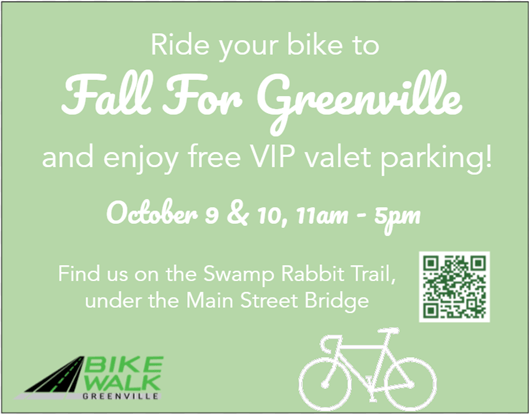
I made a flyer that could be shared on social media, and would recommend sharing with local bike rental agencies, bike shops, city tourism agencies, hotels, and any other parties you can think of who might have people interested in parking a bike at the event. A QR code links to a pin on Google Maps to help clarify the location of the valet. The fact that we are able to use this location consistently every year also really helps people find us!

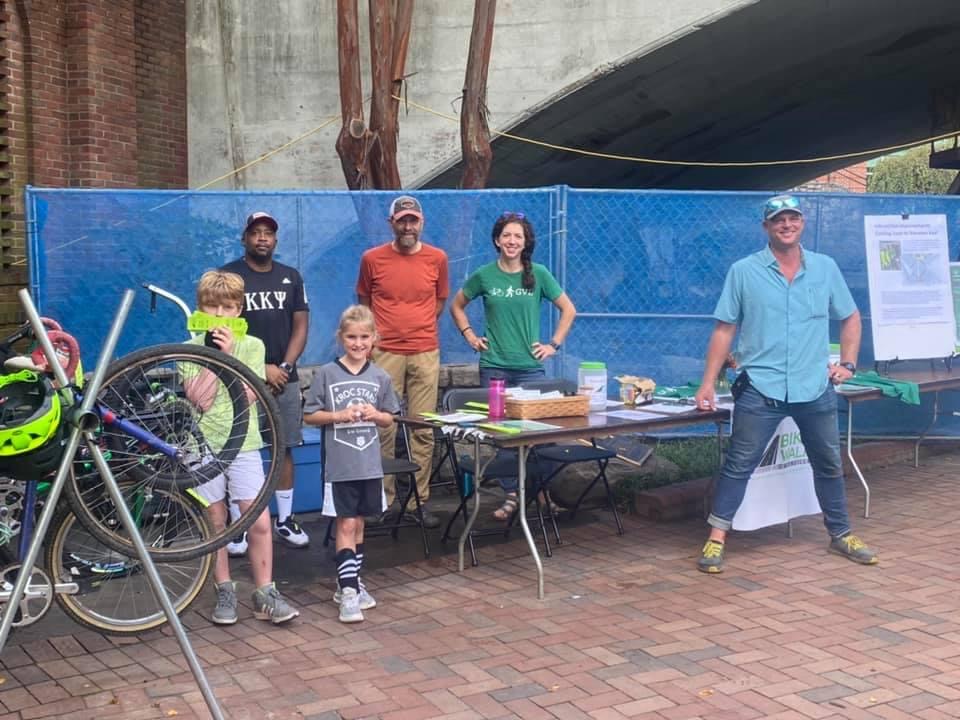
This year, we had the added challenge of working around bridge construction that was delayed from its planned completion date. Since we were unable to use our usual covered area under the bridge, we had to improvise a corralled area next to the bridge for the bike parking and set up our tables across from it. We made the best of it and look forward to a nice renovated bridge to work under at the next valet!

I made a short video to show some of the specifics of what I brought for tabling, all packed on my Burley cargo bike trailer, so you can check out more details here.

Since I was trying to line up the voiceover, I wrote out a script and while I didn’t totally stick to it, I figured I would include it in case reading it is easier than listening to the video audio:

Here is our fall 2021 bike valet setup, and for context on how we do this every year I will link to my blog post that gives some background on how and why we coordinate this event

My hope is to grow the size of this valet since it’s a twice a year thing, but for now we anticipate parking up to 100 bikes per day between 11-5 on a Saturday and a Sunday. So this is our setup.

We have this BIKE VALET sign provided by the city, and one thing I want is to get more of these made, and for them to say FREE BIKE VALET PARKING, to help make it more clear what we’re about. I also want to add signage along the trail coming in, like little yard signs, that let people who are riding downtown know that we are here and a QR code for a pin on Google Maps to help find us.

So I think that the added signage would go a long way in getting the word out that we’re here and that we’re a totally free service.

And so because of construction going on, on one side of the trail we had this small area where we could corral bikes, this was in the morning and an hour later it was pretty full,

Then on the other side of the trail is where we set up the tables with brochures, merch like our tshirts, and some posters talking about the projects that our nonprofit has been involved with most recently. And so this is where we engage with people, draw them in with our table stuff, and chat about local projects and how they could get involved and stay up to date.

As I mentioned in the blog post, the valet is usually under the bridge over there, but we had to pivot because the construction was not finished in time. I used a table and a fence to block off easy access to the bikes, and I had this checker tape as well in case I needed to make more of a barrier, but we were able to make this work.

I made the tags myself because I couldn’t find a template, so if you want the template I’d be happy to share it with you. Maybe I can link it on Google docs.  But basically they’re printed on card stock, stacked in number order, and the top portion we had a space to write a name and phone number, and the bottom part had a matching number and we ripped it off and gave it to the visitor as a claim stub. Masking tape or a stapler could be used to affix to the bike. We used a tag for each bike and went in order so that we could get a total daily count easily, without having to count up tags at the end.

And then over on the table, I have some stickers and bike jewelry that I made awhile back, they’ve been popular with people and I like having stuff on the table. I have a suggested donation signage, and we have some tshirts left for sale as well. I keep a couple out on the table and the rest are stored in the box to keep things tidy. We have an email signup page and a bike rental gift card to giveaway that was donated, I have this donation jar and a QR code to our website donation page; we actually got almost $400 in donations this weekend between selling some shirts and people just donating on the website plus cash donations.

 We also have brochures for our nonprofit and related organizations like our state coalition, maps of the local rail trail, and then we have these laminated flyers talking about new projects going on as well as posters that I made and covered the foam board from our older projects, having them laminated was great because it actually rained for a few minutes one day, and having them up on easels was super helpful in bringing people over and weighing them down with this extra chair worked out well. We borrowed these but there are some cheap options on amazon as well.

I brought a bike pump from home just in case, could really help someone out and doesn’t hurt to have one on hand!

Some other things that I keep in our “events” box that were great to have on hand for this event: sharpies, pens, clear tape, masking tape that we used to tag bikes because it stuck to paper but was gently on the bikes, a strong packing tape (gorilla would work too), and the reason for all of this tape is because things fly away in the breeze so having plenty of tape comes in handy

A pair of scissors, and this checker tape that I mentioned I could use for corralling the bikes.

I keep sidewalk chalk in our events box in case we can legally use it, for this particular event they didn’t want to use it, but if we were at a brewery or something this would be a fun way to add signage.

Overall we parked a lot of bikes and raised some money, but best of all we were able to engage with the community, people were so grateful we were here, and they were excited to talk about our mission, which is improving biking and walking infrastructure to make our community a better and safer place to live.

If you have any questions or ideas I didn’t cover, please leave them in the comments, I love hearing what y’all have to add!

At Your Service

video killed the… blog

Although I fully intend to keep this blog running, it really is hard to maintain employment while using multiple online content formats to share my love of all things bikes. Ironically, this is the one that I pay for and I use it the least.. I’ve downgraded my plan, so if you’re reading this and see any unpleasant advertising please let me know so I can reassess that decision.

Over the last few months, I’ve been experimenting with a little bit of (very basic, no frills) video content as another possible avenue of answering common questions, reviewing/recommending products, etc. You can check out my YouTube channel here and feel free to let me know what kind of video content would be helpful/informative/entertaining!

(As always, my instagram is another way to stay up to date on my most recent bike adventures as well.)

Now back to planning some bike travel for this spring and summer.. can’t wait to share it with you!

video killed the… blog

Bike Overnight Intro

Forgot to mention here, as I did elsewhere, that I posted an ‘intro to touring’ video last month with supporting materials from Adventure Cycling. I ramble on about how to pedal your bike with lots of stuff on it for FORTY. ONE. MINUTES. Somehow, a surprising number of people have not only gotten through it but actually commented/emailed me… which let me assure you, makes me over the freakin’ moon when I hear that someone found my bike propaganda to be helpful.

Feel free to let me know what other topics I can post about, here or in another recorded video format!

PS – as I mentioned in the video, you can try out Adventure Cycling with a free 6 month membership at this link.

Bike Overnight Intro

#mytrailangel

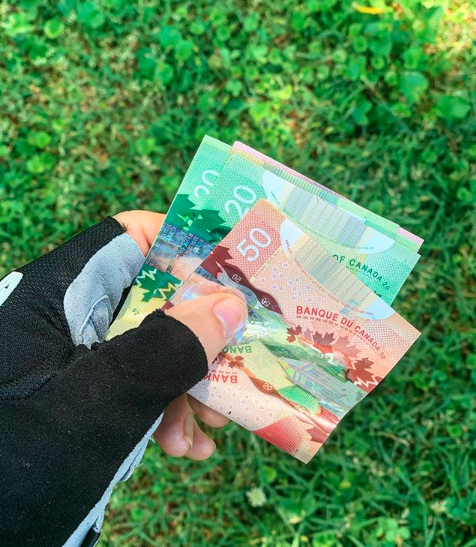
On the first day of my solo bike tour last summer, I lost my wallet. On the second day of my solo bike tour last summer, I realized that I lost my wallet. Somehow, in a thirsty delirium while climbing West through the Kootenays on my way out of Banff, I had managed to drop it somewhere in a roadside hotel where I had stopped to ask for a water refill. I didn’t know that at the time, or even for another 6 months, when my wallet miraculously showed up in the mail.

My journal entries from days 2 and 3 relayed some choice words to myself for being so careless with something so important, questioning my sanity and capability of completing another 1300 miles of solo touring, and intense gratitude that I still had my passport, an old driver’s license, and a credit card (albeit one that was not accepted anywhere in Canada). 

It’s pretty tiring to ride 80+ miles a day on a loaded touring bike in the middle of the summer. It’s downright exhausting to do that while also trying to keep panic at bay, mentally sprinting through every possible course of action to make some sort of plan, and tacking on an extra 25 miles of detour to get to a Western Union.

In the late afternoon of day 3, I pulled over to stretch and rummage for a snack at a small roadside pullout overlooking a river. A sweet older gentleman approached me to say hello, and said that he had passed me earlier in the day so it seemed I was going on ‘quite a journey’. I laughed weakly and told him that it had already been quite the adventure. Although I was starting to mentally accept my situation, my voice broke when I said the words out loud that I had lost my wallet the first day and was still figuring out how to resolve my situation. The man immediately expressed concern and without seeming to even think twice, pressed some bills into my hand as I tried to regain my composure, mortified that I had started to tear up when really, as I assured him, I was totally ok. 

Joseph, as he introduced himself, insisted that I accept it. With tears in his own eyes, he explained to me that he and his wife had been married for over 40 years of marriage and had wonderful adventures together all over the world before she passed away. He told me, ‘those were the happiest years of my life. Now it’s your turn to go and see the world’.

Thankfully, my luck turned around after meeting this ‘trail angel’, as they are called. I was able to get my money order the next day, and kept Joseph’s cash tucked in my passport, where it remains, a sacred relic of a roadside miracle. It will come with me back to Canada when it’s safe to travel internationally again, and I will find some way to use it that pays it forward to another adventurer. 

This post was written as a submission to Adventure Cycling Association‘s call for Trail Angel stories. Stay tuned to their social media sites for more stories!

#mytrailangel